Major Axes
Active Learning



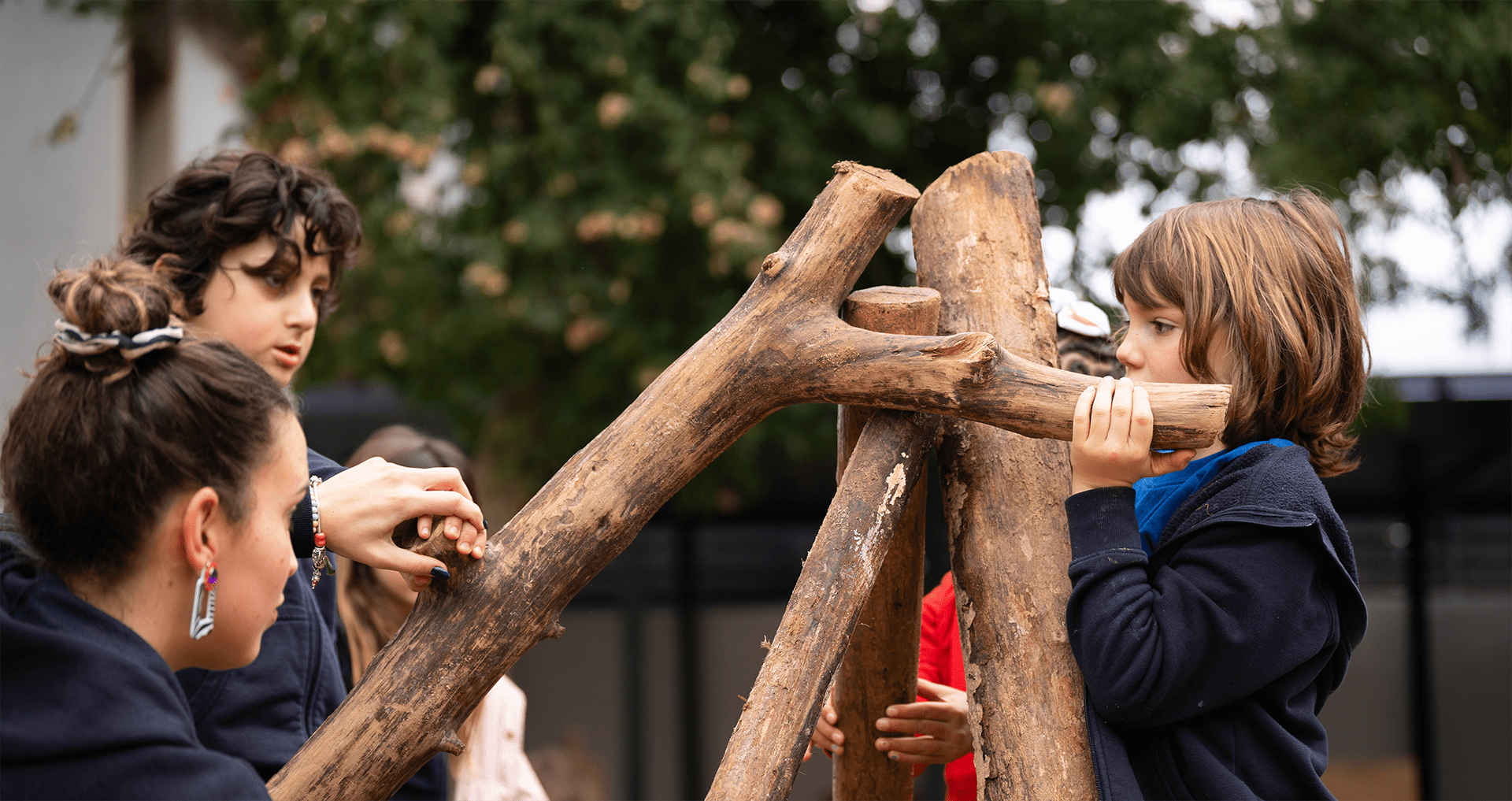
Through tangible proposals, the teacher supports the student in this learning process. The teacher creates practical activities that lead the student to build their knowledge by acting on the materials, interacting with others, clarifying questions, verbalizing the knowledge learned, systematizing the contents (using effective study techniques), and retaining information. The worksheets and textbooks are an integral part of this learning process, but they appear in a contextualized and meaningful way.
Students need to learn how to learn, they need to get to know themselves and decide which study and work methods suit them best. To do this, they need to encounter different strategies and techniques, practice them effectively, and reflect on the results. All this work is done with the specialized support of a HighScope teacher.
This means that the focus of the program is not on teaching the subject, but on learning it. It is not enough for the teacher to teach; the student must learn through a continuous and fascinating process, teaching-learning.

Interaction and learning go hand in hand. We know that by interacting, the learner learns to give and take, to listen and speak, to express feelings and emotions, and to seek solutions to challenges.
A positive interaction environment focuses on all that the learner can do and knows how to do. It views mistakes as a learning opportunity and resilience as a fundamental skill for the individual’s evolution.
Raiz teachers have specific training in interaction, motivation, and problem solving, so they know how to support students in these key areas, which are fundamental to how the learner sees themselves, interacts with others, and interprets the world.


Interaction and learning go hand in hand. We know that by interacting, the learner learns to give and take, to listen and speak, to express feelings and emotions, and to seek solutions to challenges.

Assessing implies reflecting on the learner’s progress in the various areas of development. Reflection is an essential moment. Students at Raiz reflect on what they do and the results they get and design tangible measures for what they want to do and new strategies to implement.
The assessment process has different contours at each stage of a student’s life and in all of them it plays a key role in learning. Plan-Do-Review (PDR) is the centerpiece of this process and becomes an essential tool that the learner uses in their school, personal, and professional lives.
As Piaget states, “knowing does not consist in copying the real, but in acting on it and transforming it.”


Punctuality, attendance, and full commitment to the situation are experienced daily as promoters of organization, efficiency, and success. Our teaching times are organized in such a way that the student has daily time to work individually, to work in small groups, and to work in a large group.